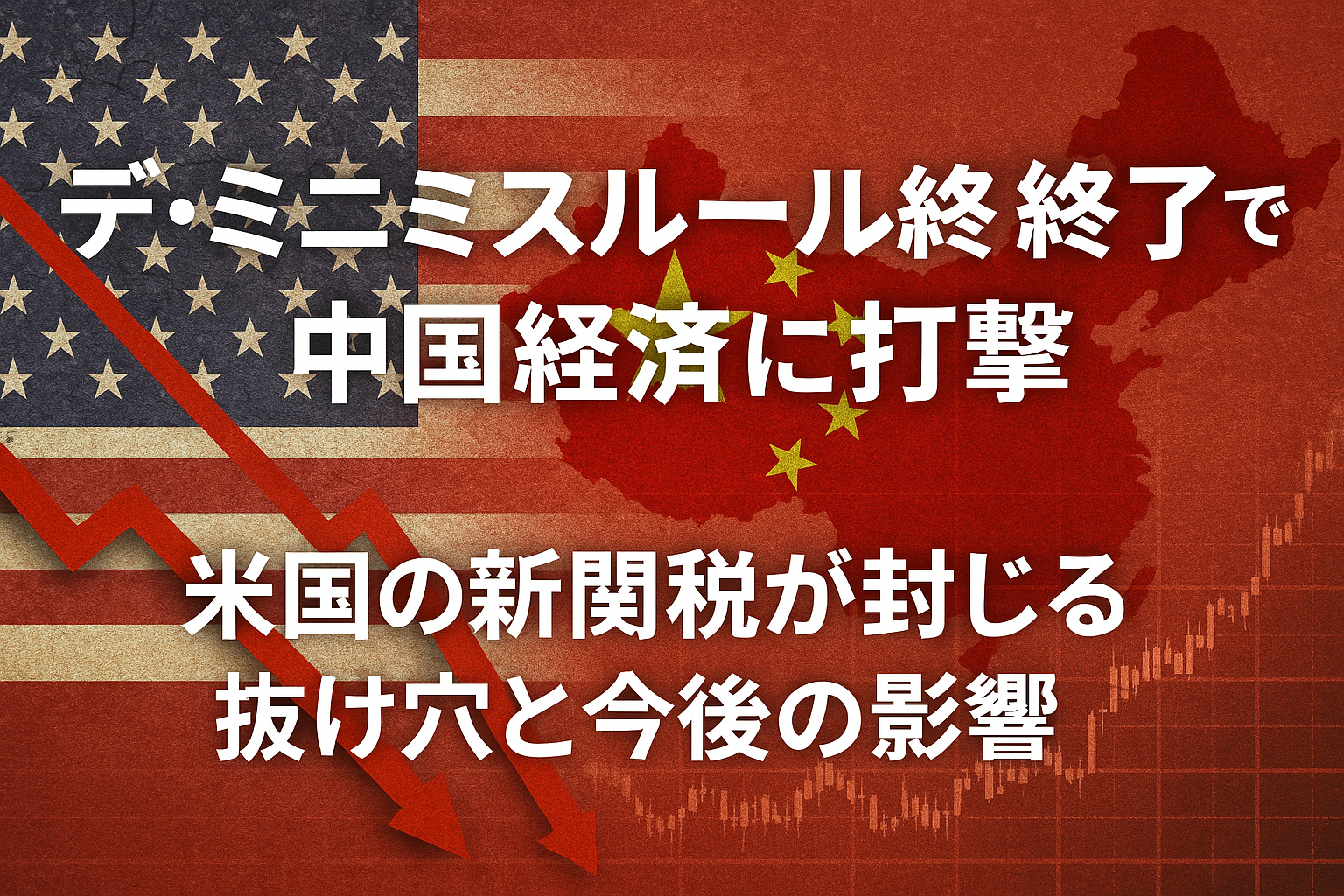
On May 2, 2025, the U.S. will end the "de minimis" rule that applied to low-cost imports from China and Hong Kong. As a result, the means of avoiding tariffs used by Chinese companies will be blocked, and it is expected to have a significant impact on the Chinese economy in the future.
What is the De Minimis rule?
The de minimis rule is a system that exempts imported goods below a certain amount from customs duties. In the United States, this threshold was raised from $200 to $800 in 2016. This allowed small packages under $800 to be imported into the U.S. without customs duties, and many Chinese companies took advantage of the system to deliver low-priced goods directly to U.S. consumers.
The end of the de minimis rule on May 2 and its consequences
On April 3, 2025, President Trump signed an executive order ending the application of the de minimis rule to imports of $800 or less from China and Hong Kong. As a result, from May 2, tariffs will also be imposed on these small shipments.
Specifically, a 30% ad valorem tax or $25 per item tariff will be applied from May 2, and the tariff per item will increase to $50 from June 1. The move is expected to have a significant impact on Chinese online retailers, especially Shein and Temu.Wikipedia+3New York Post+3Latest news & breaking headlines+3
Background to the closure of China's loopholes
The de minimis rule had become the primary means by which Chinese companies supplied goods to the U.S. market at low prices. However, there were criticisms that this system encouraged the influx of counterfeit goods and illegal drugs, and it was pointed out that retailers in the United States were at a disadvantage.Associated Press
For this reason, the U.S. government has decided to terminate the application of the de minimis rule in order to create a level playing field.
Future Impact on the Chinese Economy
The end of the de minimis rule and the introduction of new tariffs could be a major blow to China's export-driven economy. Nomura Holdings estimates that the measure will reduce China's export growth by 1.3 percentage points and GDP growth by 0.2 percentage points.Wikipedia
In addition, as U.S. tariffs continue to rise, China may be forced to shift its economy from reliance on exports to increased domestic demand. Some experts point out that the Chinese government may try to mitigate the impact through stimulus measures and currency adjustments.Financial Times
Overall, the end of the de minimis rule will be an important step in restricting Chinese companies' access to the U.S. market and affecting the Chinese economy as a whole.