In the spring of 2025, two major factors are simultaneously consolidating financial markets.
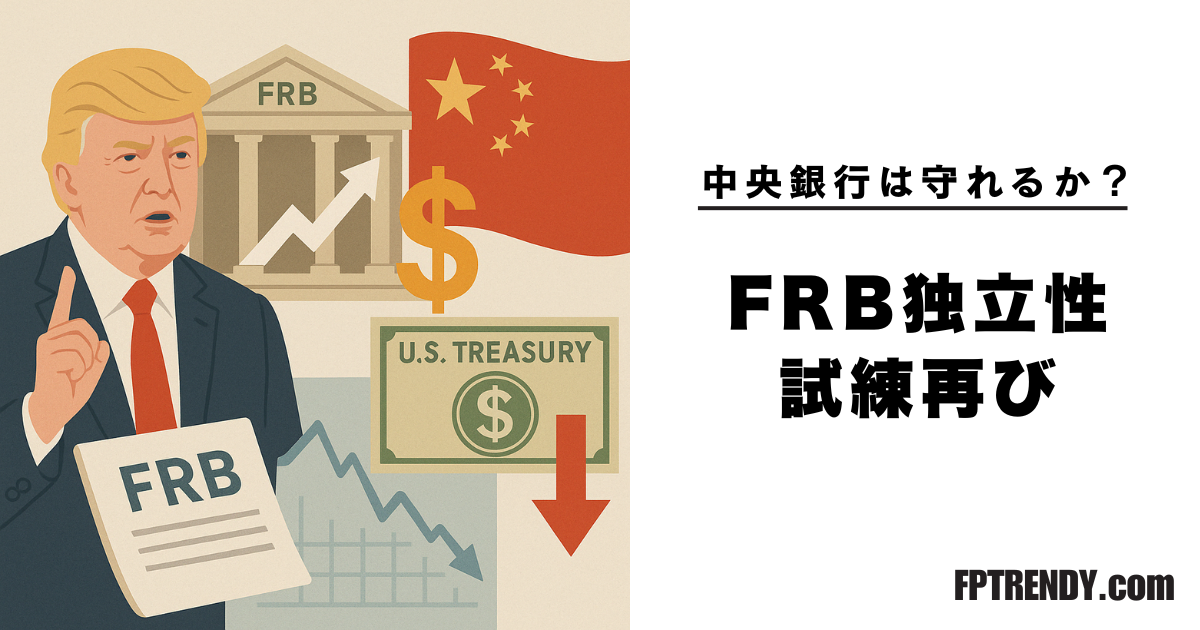
The first is President Donald Trump's return to the White House to "pressure the Fed to cut interest rates."
The other is China's quiet shift in its U.S. Treasury strategy.
What they have in common is that political developments in finance could shake market confidence to the core.
In fact, this is not a completely "new crisis." History has already warned of it.
1️⃣ The precarious distance between the Fed and the President: A warning from the past
🏛️ The independence of the central bank is of absolute value in the modern economy.
However, there are many cases in history where it has been distorted by the president's wishes.
One of the most famous is the relationship between the Nixon administration and Federal Reserve Chairman Arthur Burns in the 1970s.
At that time, Nixon, looking ahead to re-election, asked Burns to ease monetary policy. The Fed complied.
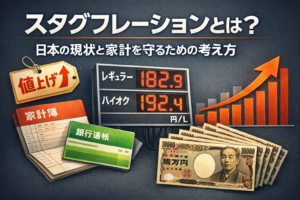
As a result, the U.S. economy has entered "stagflation," in which inflation and recession proceed simultaneously.
Burns went down in history as the "lowest-rated Fed chairman of all time."
📊 Historical Cases of Undermining the Fed's Independence
👤 President: Nixon
🏛️ Fed Chairman: Arthur Barnes
📝 Substance: Calling for monetary easing for re-election
⚠️ Result: Stagflation occurs
👤 President: Trump (1st term)
🏛️ Fed Chairman: Jerome Powell
📝 Substance: Pressure to cut interest rates and hints at dismissal
⚠️ Result: Stock prices and market turmoil
👤 President: Trump (reappointed)
🏛️ Fed Chairman: Powell continues to play
📝 Substance: Again call for a rate cut
⚠️ Result: Triple depreciation (stocks, bonds, currencies) induced
2️⃣ "Re-enactment scenarios" to which the machine reacts
🤖 There was a similar picture in December 2018. As the U.S.-China trade war intensified, Powell continued to raise interest rates.
At this time, as a result of Mr. Trump's increased pressure, the Fed relaxed its policy slightly. The Dow Jones Industrial Average rebounded from a sharp decline.
📉 It is interesting to note that the reaction to these developments were: It was a machine, not a human That's the point.
In today's world, where AI-based automated trading has become commonplace, algorithms immediately start buying and selling when a "situation similar to the past" occurs.
In other words, Mr. Trump's remarks can cause the market to be rough. Mechanisms, not emotions It is also a problem.
3️⃣ Another Landmine: China's "U.S. Treasury Risk"
🇨🇳 Ostensibly, China has not significantly changed its holdings of U.S. Treasuries, especially government bonds.
But Breakdown A very important move is underway.
China has been selling in the past few years because: U.S. Government Housing Finance (GSE) Bonds These are so-called agency bonds.
📊 Major Assets and Trends
📝 Substance: Ordinary long-term government bonds
📊 Holdings in China: Stable at about $759 billion
📝 Substance: Published by Fannie Mae and Freddie Mac
📉 Holdings in China: $271 billion by the end of 2023 → $207 billion at the beginning of 2025 (significant decrease)
🏠 Agency bonds are an important source of funding for the U.S. mortgage market.
The rise in yields is directly linked to a rise in mortgage rates.
China's cautious divestment strategy is Quiet pressure on the U.S. common economy It can also be taken as.
4️⃣ Finance is quietly a weapon
🧨 Some have interpreted China's sale of U.S. Treasuries as a "financial war" or "decoupling."
However, if you sell it all at once, China's own assets will also decrease. Quietly and strategically We are moving forward.
Foreign media such as Bloomberg and the FT are also cautious about "weaponizing finance," but pointed out that there are definitely risks.
It can also be read as a "silent preparation" for sanctions.
5️⃣ Lessons learned have already been recorded
📘 President Trump's pressure is once again testing the Fed's neutrality.
At the same time, China is silently swapping asset positions.
This is no coincidence.
📜 Past history shows the "outcome" of this movement.
That's why it's time for investors, the media, and policymakers to take a serious look at the lessons of the past.
⚠️ Trust is lost in an instant.
It takes time and very calm judgment to get it back.